Making Blackness Visible: Why Counting Morena and Afro-Latino Populations is Critical for Census EquityHacer visible la negritud: por qué contar a las poblaciones morenas y afrolatinas es fundamental para la equidad del censo
About 6 million U.S. adults identify as Afro-Latino. As the 2030 Census is redesigned, advocates warn that failing to count Blackness within Latinidad weakens civil rights and representation for Black and Latino communities alike.Unos 6 millones de adultos en Estados Unidos se identifican como afrolatinos. Mientras se rediseña el Censo de 2030, defensores advierten que no contar la negritud dentro de la latinidad debilita los derechos civiles y la representación de las comunidades negras y latinas por igual.
 ByPor Dr. Richard Nuñez-Lawrence, Founding Executive Director, ALAPADirector ejecutivo fundador de ALAPA6 min readmin de lectura
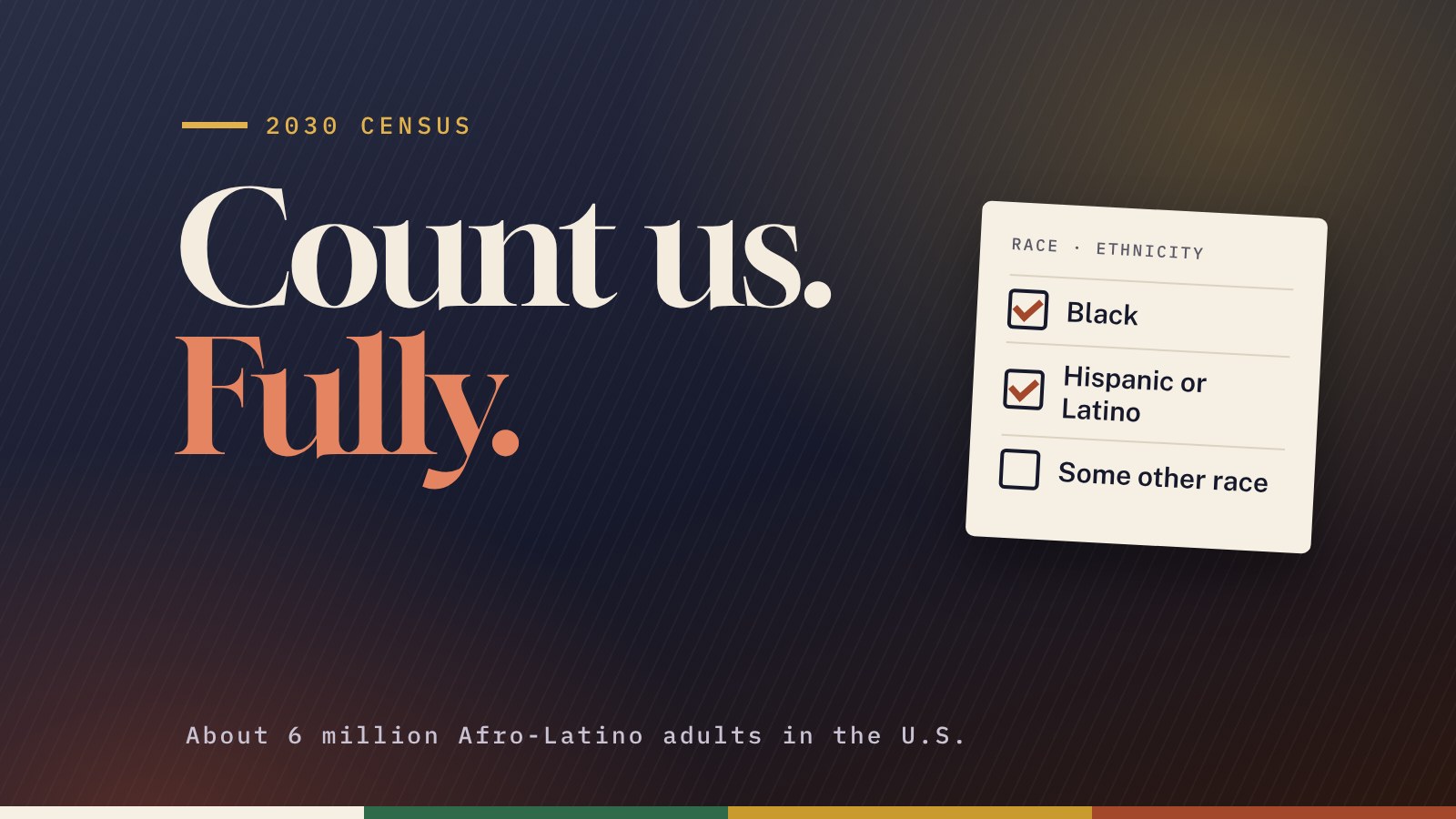
An estimated 6 million U.S. adults identify as Afro-Latino, making up approximately 12% of the total Hispanic population and 2% of the overall adult population in the United States. Yet, despite representing millions of lives, cultural intersections, and histories, a pervasive feeling persists that Afro-Latinos are not being heard, politically recognized, or accurately captured by the traditional standards of the U.S. Census.
With the recently passed November 2, 2026 public comment deadline concerning proposed structural overhauls to the 2030 decennial census, a powerful, multi-organizational coalition of individuals and civil rights groups is speaking out. Their message is clear: failing to explicitly count and recognize Blackness within the Latino diaspora erodes civil rights, dilutes political representation, and weakens civic engagement for both African American and Latino communities alike.
The Data Gap: Millions of Afro-Latinos Face Erasure
A foundational study from the Pew Research Center highlights the vast scope of this population. The data reveals that Afro-Latino identity exists multi-dimensionally along lines of race, ancestry, and deep cultural roots tied to Latin America’s colonial history.
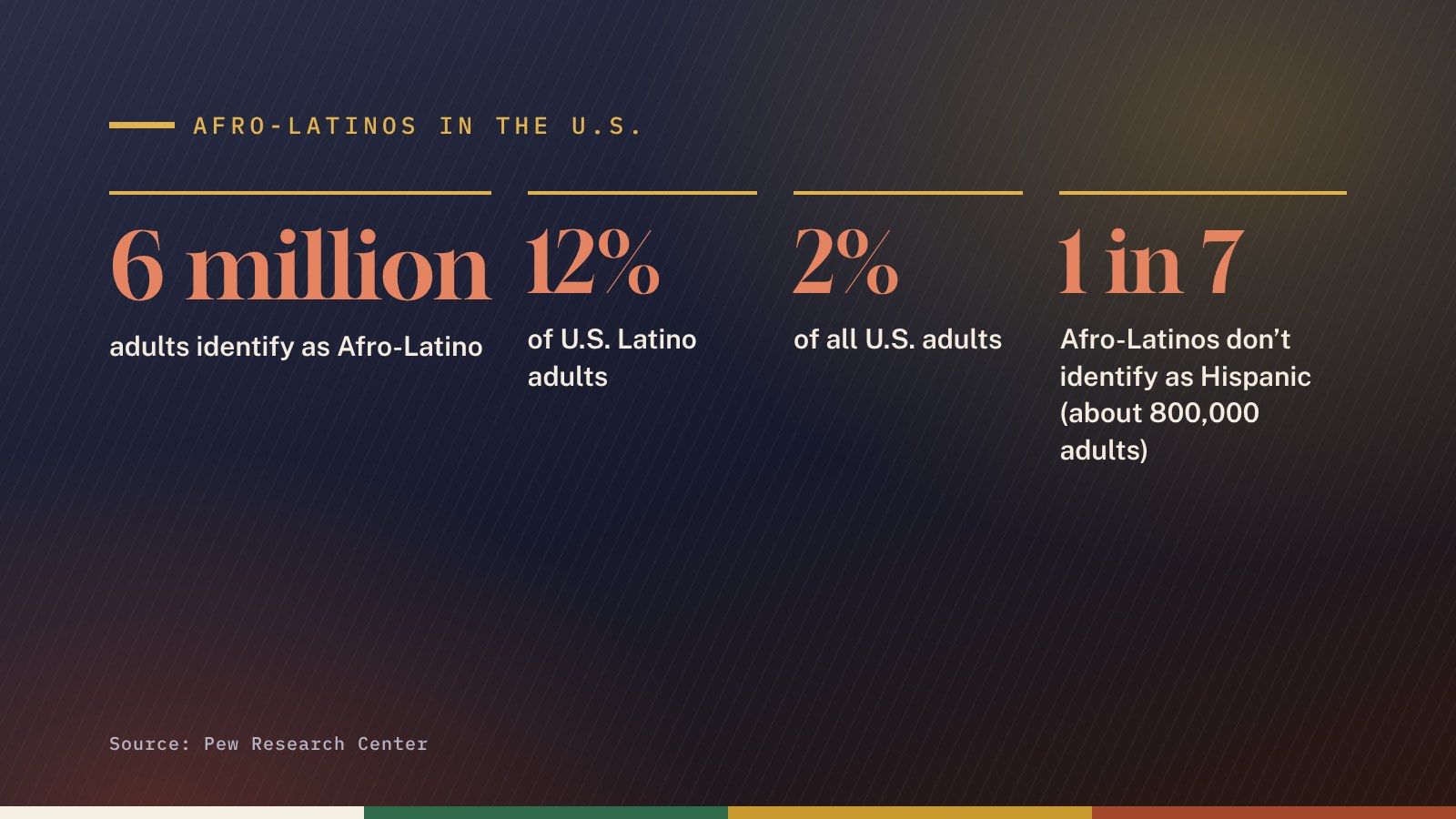
Demographic insight (Pew Research data):
- U.S. adults identifying as Afro-Latino: ~6 million
- Share of the U.S. Latino population: 12%
- Afro-Latinos who do not identify with the political label “Hispanic”: 1 in 7 (~800,000 adults)
- U.S. Latino adults who self-identify as having African descent: 25% (1 in 4)
Despite these significant numbers, the standard framework of the U.S. Census Bureau has historically failed to adequately parse this intersection. In the decennial census, “Hispanic/Latino” has traditionally been treated as an ethnicity, while respondents must choose a separate racial category (such as White, Black, or American Indian).
Research from the UCLA Latino Policy & Politics Institute underscores that this format forces a false dichotomy: current census datasets heavily undercount Afro-Latinxs because the bureau’s standard definitions often culturally decouple Blackness from Latinidad. Many phenotypically Black or morena (dark-skinned) individuals do not select the “Black” racial box because they do not feel the standard U.S. definition captures their identity, leading to systemic under-counting.
Unity in Blackness: Why Counting Afro-Latinos Strengthens the Black Vote
Crucially, advocates emphasize that counting Afro-Latinos does not diminish, split, or negate the count of the broader Black population in America—because Afro-Latinos are Black people.
Within U.S. politics, a persistent, manufactured anxiety exists that creating specialized categories for Afro-descendant Latinos will siphon numbers away from African American population counts. Civil rights demographers argue the exact opposite is true. When census instruments fail to capture the intersection of Blackness and Latinidad, millions of Afro-Latinos check the “Some Other Race” box or select “White” out of structural confusion.
By actively clarifying that Blackness encompasses the entire African Diaspora—including those of Caribbean, Central, and South American descent—the census actually prevents the undercounting of Black people as a whole. A precise, inclusive count ensures that federal resources and political representation tied to the Black demographic accurately reflect the true, expansive size of the Black population in the United States. Rather than a zero-sum game, recognizing Afro-Latinidad is a mechanism to fortify and expand total Black political power.
The High Stakes of the 2030 Census Changes
The demand for accurate data has reached a boiling point due to recent regulatory battles. The Census Bureau extended its deadline to November 2, 2026, for the public to submit formal feedback on highly controversial proposed rules for the 2030 Census. The proposal included plans to entirely remove race and ethnicity questions from the core decennial questionnaire, relying instead on smaller, less resourced samplings like the American Community Survey.
For Afro-Latinos, the implications of these changes are devastating. Activists and civil rights groups spent decades fighting to make Blackness visible within Latino communities by demanding that racial data be disaggregated. Removing or flattening these questions obscures the distinct systemic challenges Afro-Latinos experience. According to Pew Research, Afro-Latinos report significantly darker skin tones and face disproportionately higher rates of police stops and discrimination compared to lighter-skinned Latinos.
When the government lacks accurate data on who is Black and Latino, it cannot effectively track discrimination, enforce the Voting Rights Act, or target resources toward closing disparities in health care and housing.
A United Front: Organizations Demanding Representation
An intersectional network of advocates is rallying to ensure that morena and Black-identifying Latino individuals are fully counted. National organizations are building a unified front rather than acting in isolation:
- Afro-Latino Association for Policy and Advocacy (ALAPA): Operating on the frontline of systemic change since 2017, ALAPA acts as a vital resource center, policy advocacy engine, and safe space. Its core mission centers on uniting Black and Latino communities, driving Afro-Latino engagement to increase critical policy and program initiatives, and delivering essential representation, support services, and community information. By bridging spaces where Blackness is traditionally edited out of Latino conversations and Latinidad is overlooked in Black ones, ALAPA fights to ensure public policy treats individuals as “Black and Latino. Both, fully.”
- Latino Victory: This organization launched the Afro Latinas Lead initiative to address the critical lack of political representation. Despite there being 6 million Afro-Latinos in the country, there has historically been a stark absence of publicly identifying Afro-Latinas in the halls of Congress.
- Civil Rights Coalitions: Organizations such as LatinoJustice PRLDEF, the Legal Defense Fund (LDF), Black Voters Matter, and the National Coalition on Black Civic Participation have combined forces. They explicitly connect the preservation of demographic data to the protection of democracy and minority voting power.
- Grassroots and Digital Mobilization: Leading up to the November 2026 deadline, coalitions like Hands Off Our Census mobilized thousands of individuals to submit formal protests to regulations.gov under docket USBC-2026-0628.
Increasing Census Engagement Across Black and Latino Communities
There is a profound operational need to explicitly identify and engage morena and Black Latino populations. Bridging this gap serves as a powerful mechanism to increase overall census participation and civic mobilization for both broader African American and Latino communities.
Historically, census outreach has treated Black and Latino communities as completely separate monoliths. This approach leaves individuals at the intersection—such as millions of Caribbean-rooted Americans of Dominican or Puerto Rican descent—feeling alienated by both strategies. When federal and local campaigns use language and categories that honor moreno and Afro-descendant identities, it fosters deep-seated trust.
By designing census questions and local civic programs that validate the dual experience of being Black and Hispanic, the country can tap into under-engaged demographics. Far from dividing communities, this intersectional approach builds a necessary bridge. Greater inclusion directly translates to fairer congressional apportionment, more equitable federal funding for urban neighborhoods, and a stronger unified front against the systemic dilution of minority voting power. To build a reflective democracy, the U.S. government must first look at its people clearly—and that begins by counting every dimension of Black Latinidad.
Dr. Richard Nuñez-Lawrence is the founding Executive Director of the Afro-Latino Association for Policy and Advocacy (ALAPA).
Se calcula que 6 millones de adultos en Estados Unidos se identifican como afrolatinos, lo que equivale aproximadamente al 12 % de la población hispana total y al 2 % de la población adulta del país. Sin embargo, aunque representan millones de vidas, cruces culturales e historias, persiste la sensación generalizada de que a las personas afrolatinas no se las escucha, no se las reconoce políticamente ni se las refleja con precisión en los criterios tradicionales del Censo de Estados Unidos.
Tras el reciente vencimiento, el 2 de noviembre de 2026, del plazo de comentarios públicos sobre los cambios estructurales propuestos para el censo decenal de 2030, una amplia coalición de personas y organizaciones de derechos civiles alza la voz. Su mensaje es claro: no contar ni reconocer explícitamente la negritud dentro de la diáspora latina erosiona los derechos civiles, diluye la representación política y debilita la participación cívica de las comunidades afroestadounidenses y latinas por igual.
La brecha de datos: millones de afrolatinos frente a la invisibilización
Un estudio fundamental del Pew Research Center destaca el enorme alcance de esta población. Los datos muestran que la identidad afrolatina es multidimensional y abarca la raza, la ascendencia y profundas raíces culturales ligadas a la historia colonial de América Latina.
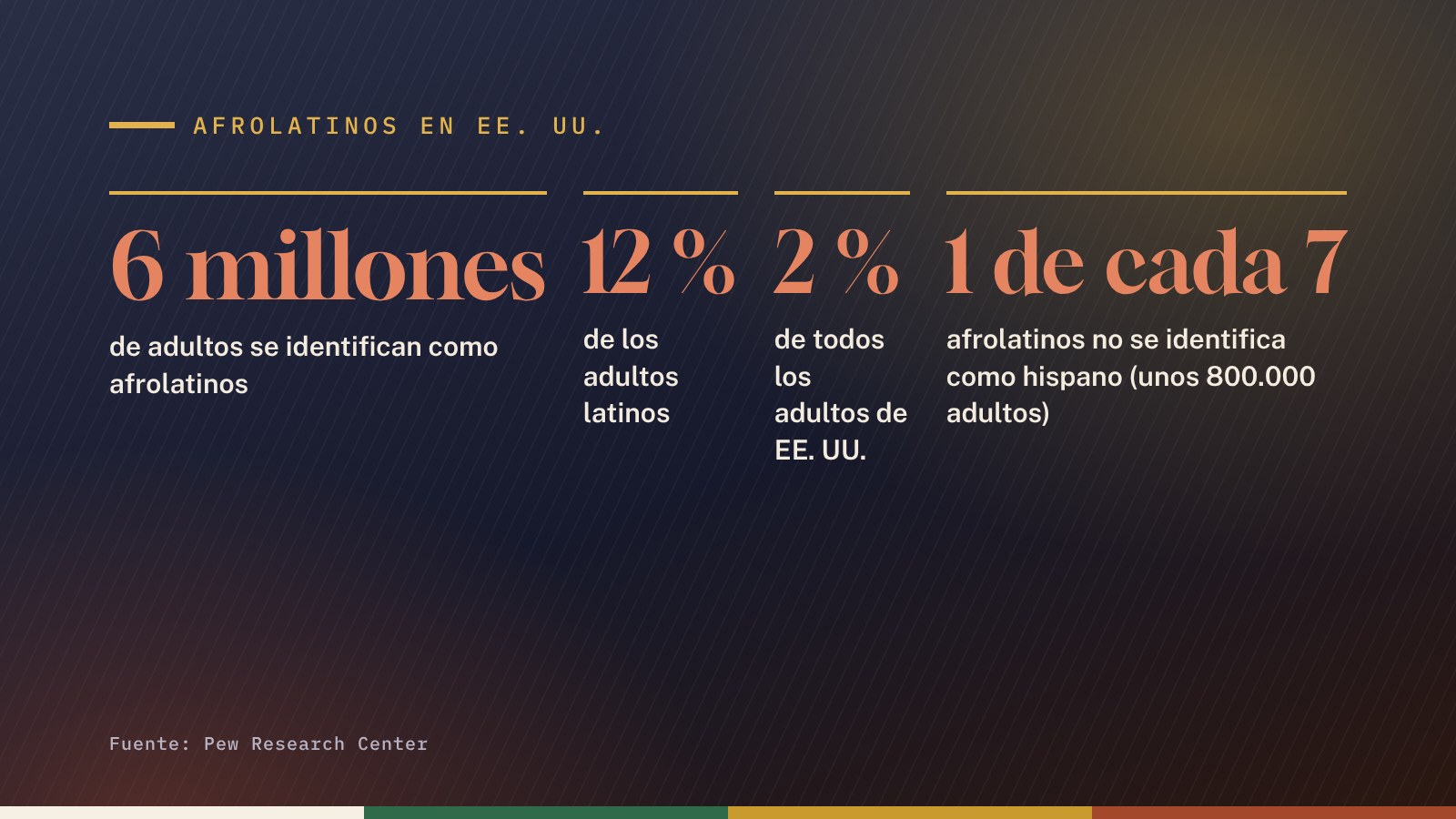
Datos demográficos (Pew Research):
- Adultos en EE. UU. que se identifican como afrolatinos: ~6 millones
- Proporción de la población latina de EE. UU.: 12 %
- Afrolatinos que no se identifican con la etiqueta política «hispano»: 1 de cada 7 (~800.000 adultos)
- Adultos latinos en EE. UU. que se identifican como de ascendencia africana: 25 % (1 de cada 4)
A pesar de estas cifras significativas, el marco habitual de la Oficina del Censo de EE. UU. no ha sabido reflejar adecuadamente esta intersección. En el censo decenal, «hispano/latino» se ha tratado tradicionalmente como una etnia, mientras que las personas deben elegir por separado una categoría racial (como blanca, negra o indígena americana).
Las investigaciones del Instituto de Políticas Latinas de UCLA (UCLA Latino Policy & Politics Institute) subrayan que este formato impone una falsa dicotomía: los datos censales actuales subestiman gravemente a la población afrolatina porque las definiciones de la Oficina suelen separar culturalmente la negritud de la latinidad. Muchas personas fenotípicamente negras o morenas no marcan la casilla «negra» porque sienten que la definición estadounidense habitual no refleja su identidad, lo que provoca un subconteo sistemático.
Unidad en la negritud: por qué contar a los afrolatinos fortalece el voto negro
Los defensores subrayan algo fundamental: contar a las personas afrolatinas no disminuye, divide ni anula el conteo de la población negra en general en Estados Unidos, porque las personas afrolatinas son personas negras.
En la política estadounidense persiste una ansiedad fabricada según la cual crear categorías específicas para los latinos afrodescendientes restaría números al conteo de la población afroestadounidense. Los demógrafos de derechos civiles sostienen exactamente lo contrario. Cuando los instrumentos del censo no captan la intersección entre negritud y latinidad, millones de afrolatinos marcan la casilla «otra raza» o eligen «blanca» por confusión estructural.
Al dejar claro que la negritud abarca toda la diáspora africana, incluidas las personas de ascendencia caribeña, centroamericana y sudamericana, el censo evita en realidad el subconteo de la población negra en su conjunto. Un conteo preciso e inclusivo garantiza que los recursos federales y la representación política vinculados a la población negra reflejen con exactitud el tamaño real y amplio de la población negra de Estados Unidos. Lejos de ser un juego de suma cero, reconocer la afrolatinidad es una forma de fortalecer y ampliar el poder político negro en su totalidad.
Lo que está en juego con los cambios del Censo de 2030
La exigencia de datos precisos ha llegado a su punto máximo a raíz de recientes disputas regulatorias. La Oficina del Censo amplió hasta el 2 de noviembre de 2026 el plazo para que el público presentara comentarios formales sobre unas normas propuestas muy controvertidas para el Censo de 2030. La propuesta incluía planes para eliminar por completo las preguntas sobre raza y etnia del cuestionario decenal principal y depender, en cambio, de muestreos más pequeños y con menos recursos, como la Encuesta sobre la Comunidad Estadounidense (American Community Survey).
Para las personas afrolatinas, las consecuencias de estos cambios son devastadoras. Activistas y organizaciones de derechos civiles lucharon durante décadas para hacer visible la negritud dentro de las comunidades latinas, exigiendo que los datos raciales se desglosaran. Eliminar o simplificar estas preguntas oculta los problemas sistémicos específicos que enfrentan las personas afrolatinas. Según Pew Research, las personas afrolatinas reportan tonos de piel significativamente más oscuros y sufren tasas desproporcionadamente más altas de detenciones policiales y discriminación que los latinos de piel más clara.
Cuando el gobierno no tiene datos precisos sobre quién es negro y latino, no puede dar seguimiento eficaz a la discriminación, hacer cumplir la Ley de Derecho al Voto (Voting Rights Act) ni dirigir recursos a cerrar las brechas en salud y vivienda.
Un frente unido: organizaciones que exigen representación
Una red interseccional de defensores se moviliza para garantizar que las personas latinas morenas y negras sean contadas plenamente. Las organizaciones nacionales están construyendo un frente unido en lugar de actuar de forma aislada:
- Asociación Afrolatina de Política y Defensa (ALAPA): En la primera línea del cambio sistémico desde 2017, ALAPA funciona como un centro de recursos, un motor de incidencia en políticas públicas y un espacio seguro. Su misión central es unir a las comunidades negras y latinas, impulsar la participación afrolatina para promover iniciativas de políticas y programas fundamentales, y ofrecer representación, servicios de apoyo e información comunitaria esenciales. Al tender puentes en espacios donde la negritud suele borrarse de las conversaciones latinas y la latinidad se pasa por alto en las negras, ALAPA lucha para que las políticas públicas traten a las personas como «negras y latinas, plenamente las dos cosas».
- Latino Victory: Esta organización lanzó la iniciativa Afro Latinas Lead para responder a la grave falta de representación política. Aunque en el país hay 6 millones de afrolatinos, históricamente ha habido una notable ausencia de mujeres que se identifiquen públicamente como afrolatinas en el Congreso.
- Coaliciones de derechos civiles: Organizaciones como LatinoJustice PRLDEF, el Fondo de Defensa Legal (Legal Defense Fund, LDF), Black Voters Matter y la Coalición Nacional para la Participación Cívica Negra (National Coalition on Black Civic Participation) han unido fuerzas. Vinculan de forma explícita la preservación de los datos demográficos con la protección de la democracia y del poder de voto de las minorías.
- Movilización comunitaria y digital: En las semanas previas al plazo de noviembre de 2026, coaliciones como Hands Off Our Census movilizaron a miles de personas para presentar objeciones formales en regulations.gov, en el expediente USBC-2026-0628.
Aumentar la participación en el censo en las comunidades negras y latinas
Existe una profunda necesidad práctica de identificar y llegar de forma explícita a las poblaciones latinas morenas y negras. Cerrar esta brecha es una forma eficaz de aumentar la participación general en el censo y la movilización cívica de las comunidades afroestadounidenses y latinas en su conjunto.
Históricamente, las campañas del censo han tratado a las comunidades negras y latinas como bloques completamente separados. Este enfoque deja a quienes viven en la intersección, como millones de estadounidenses de raíces caribeñas y ascendencia dominicana o puertorriqueña, sintiéndose excluidos por ambas estrategias. Cuando las campañas federales y locales usan un lenguaje y unas categorías que honran las identidades morenas y afrodescendientes, se genera una confianza profunda.
Al diseñar preguntas del censo y programas cívicos locales que validen la doble experiencia de ser negro e hispano, el país puede llegar a sectores poco movilizados. Lejos de dividir a las comunidades, este enfoque interseccional construye un puente necesario. Una mayor inclusión se traduce directamente en una distribución más justa de los escaños del Congreso, una financiación federal más equitativa para los barrios urbanos y un frente unido más fuerte contra la dilución sistemática del poder de voto de las minorías. Para construir una democracia que nos refleje, el gobierno de Estados Unidos debe primero mirar con claridad a su pueblo, y eso empieza por contar cada dimensión de la latinidad negra.
El Dr. Richard Nuñez-Lawrence es el director ejecutivo fundador de la Asociación Afrolatina de Política y Defensa (Afro-Latino Association for Policy and Advocacy, ALAPA).
ALAPA, the Afro-Latino Association for Policy & Advocacy, is a New York nonprofit for Afro-Latinos across the Americas and the Caribbean.ALAPA, la Afro-Latino Association for Policy & Advocacy, es una organización sin fines de lucro de Nueva York para la comunidad afrolatina de las Américas y el Caribe.